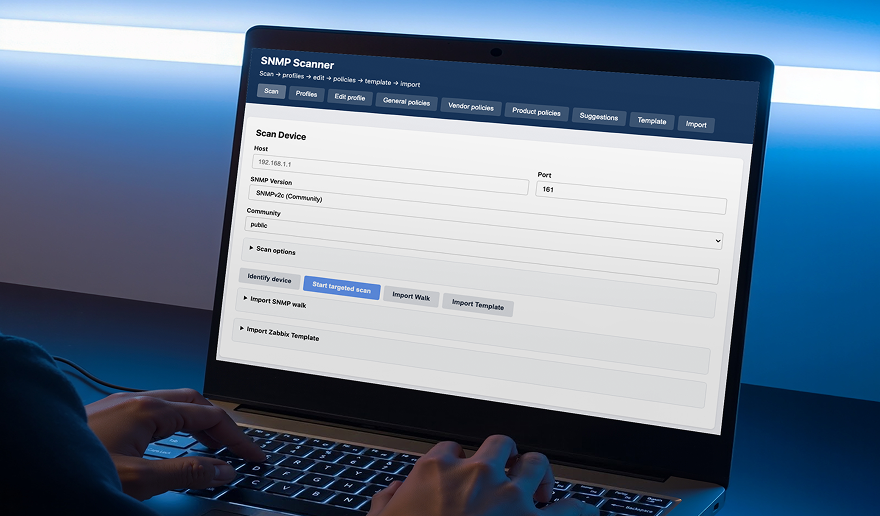
The Lebanese International University (LIU) conducts applied networking research aimed at making professional-grade monitoring practices accessible in academic settings through its Department of Computer and Communication Engineering.
The department recently completed a research project that explored how Zabbix could be used to monitor a fully virtualized network environment, with the goal of offering a model that any academic or training lab could adopt.
The challenge
Networking education broadly relies on physical lab equipment (routers, switches) that is expensive to acquire, maintain, and scale, putting realistic, hands-on monitoring practice out of reach for many programs.
The research set out to test whether a simulated network environment could be monitored exactly as one would monitor production infrastructure – collecting live metrics, visualizing device health, and practicing remote management, while operating on a budget appropriate for an academic lab.
The solution
The team built a virtual network topology in PNETLab (routers, switches, and end devices using multi-vendor images) and connected it to a Zabbix server running on a low-cost Raspberry Pi 5.
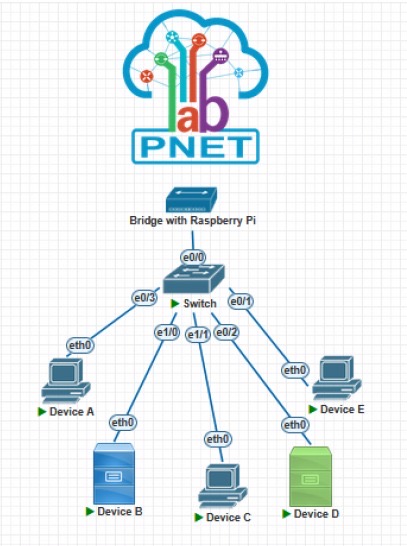
Each virtual device was assigned IP addressing compatible with the Zabbix monitoring network, allowing Zabbix to poll the simulated devices via SNMP and ICMP exactly as it would poll physical infrastructure, which in turn allowed students to understand more how the infrastructure is behaving based on these polls.
This demonstrated that students and researchers can interact with a monitoring stack that behaves identically to an enterprise deployment, entirely on virtualized, reproducible lab infrastructure that costs a fraction of physical networking gear.
The results
The integration proved that a virtual topology is indistinguishable from a physical one from Zabbix’s perspective – polling latency across 10 simulated devices averaged just 2.5ms, with the Raspberry Pi host staying under 15% CPU usage throughout testing.
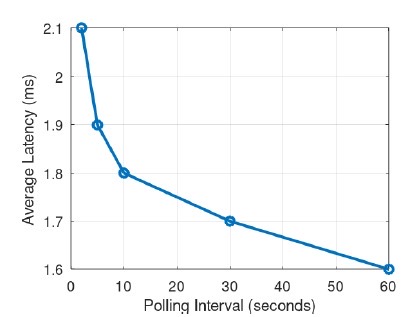
The result was a reproducible, low-cost training model where networking and monitoring concepts can be taught hands-on, repeated across cohorts, and scaled by simply adding more virtual nodes in PNETLab rather than purchasing additional hardware – one that other academic institutions facing the same budget constraints could replicate directly.
In conclusion
By combining Zabbix, PNETLab, and a Raspberry Pi 5, the team at LIU created a low-cost, reproducible virtual lab that delivers hands-on monitoring experience without the expense of physical networking equipment.
With polling latency averaging just 2.5 ms across 10 simulated devices and CPU usage remaining below 15%, the results highlight the potential of virtualized environments for teaching real-world networking and monitoring skills.
Most importantly, this approach provides a practical, scalable model that other academic institutions can adopt to make hands-on IT infrastructure monitoring more accessible to the next generation of networking professionals.
For a more in-depth look at LIU’s project or to cite the published research, visit this website.
To find out more about what Zabbix can do for eduactional institutions, contact us.

 Prev Post